Laser treatments can improve skin texture, fine lines, sun damage, and certain scars, but the options can be confusing. Terms such as fractional laser, ablative laser, nonablative laser, and CO2 laser are often used together even though they describe different approaches.
Laser skin resurfacing isn’t a single treatment. The right choice depends on your skin, the concern you want to address, how much downtime fits your schedule, and how your skin is likely to respond.
At R Skin Aesthetics, the focus is on choosing treatments thoughtfully. Your concerns come first, and we build your plan around your features, comfort level, and long-term skin goals rather than trends.
What You’ll Learn From This Article
- How laser skin resurfacing changes the skin
- The difference between ablative, nonablative, and fractional lasers
- Which concerns laser treatments may help improve
- How Pearl Fractional and Laser Genesis differ
- What recovery can look like after treatment
- Why skin tone, medical history, and treatment depth matter
- How to decide which option may fit your goals
What Is Laser Skin Resurfacing?
Laser skin resurfacing uses controlled light energy to target specific skin layers. Depending on the technology, treatment may remove a controlled portion of the surface, heat tissue beneath the surface, or create microscopic treatment zones surrounded by untreated skin.
These controlled changes start a healing response. As the treated skin recovers, surface renewal and collagen remodeling may gradually improve texture, fine lines, and other visible concerns.
A medical review of laser resurfacing describes the use of ablative, nonablative, and fractional technologies for concerns including wrinkles, photoaging, and scarring. It also explains that treatment depth and laser type influence both results and recovery.
How Laser Energy Affects the Skin
Each laser uses a specific wavelength. That wavelength determines how the energy interacts with water, pigment, blood vessels, or other skin structures.
Some resurfacing lasers remove part of the outer layer of skin while also heating deeper tissue. Others work below the surface without removing the epidermis in the same way.
The goal is not simply to create new skin. It is to produce a controlled response that allows the skin to repair itself in a predictable way.
Why Fractional Laser Treatment Is Different
A fractional laser treats small columns of tissue instead of treating the entire surface uniformly.
Because untreated skin remains between those microscopic treatment zones, healing can occur faster than with older full-surface resurfacing methods.
This distinction matters because it helps explain why some laser treatments require several days of visible recovery, while others let you return to your routine sooner.
Before comparing options, it helps to understand which concerns laser resurfacing commonly addresses.
What Skin Concerns Can Laser Resurfacing Address?

Laser treatment may address several common skin concerns, but the best device depends on what is causing the problem and how deeply it needs to be treated.
Fine Lines and Sun-Related Skin Changes
Years of sun exposure, natural aging, and repeated facial movement can contribute to fine lines and changes in skin quality.
Laser resurfacing may help soften some of these changes by renewing surface tissue or encouraging collagen remodeling below the skin.
Keep expectations realistic. Laser treatment may improve fine lines, but it does not stop aging or replace surgery when significant skin laxity is present.
Uneven Skin Texture and Acne Scars
Certain laser resurfacing treatments may also help with:
- Rough skin texture
- Some types of acne scars
- Enlarged appearing pores
- Surface irregularities
- Areas affected by sun damage
The depth and type of scar matter. Deeper acne scars may need a combination of treatments, not laser resurfacing alone.
Uneven Skin Tone
Discoloration can come from sun exposure, inflammation, vascular changes, melasma, and other causes.
That is why you should assess uneven skin tone before treatment. A laser that works well for one form of discoloration may not be the best choice for another.
The clearer the concern, the easier it is to choose the right type of laser or light treatment.
Ablative vs Nonablative vs Fractional Laser Resurfacing
These terms are often used interchangeably, but they describe different treatment characteristics.
Understanding them makes it easier to compare recovery time, treatment intensity, and expected skin response.
| Treatment Type | How It Works | General Intensity | Typical Recovery Consideration |
|---|---|---|---|
| Ablative laser | Removes controlled surface tissue and may heat deeper layers | Higher | More visible healing |
| Nonablative laser | Heats targeted tissue without removing the surface in the same way | Lower to moderate | Usually less downtime |
| Fractional laser | Treats microscopic columns while leaving surrounding skin intact | Varies | Depends on wavelength and depth |
Ablative Laser Resurfacing
An ablative laser removes controlled amounts of skin tissue.
The CO2 laser is one of the best-known examples. It has been used for concerns such as wrinkles, photoaging, and acne scarring.
Because ablative treatment affects the skin more deeply, it can involve more redness, swelling, peeling, and recovery. Greater treatment depth can also increase the chance of side effects.
This does not mean ablative treatment is inappropriate. It means patient selection, treatment settings, and aftercare deserve careful attention.
Nonablative Laser Resurfacing
A nonablative laser heats targeted tissue without removing the outer skin layer.
Because the surface remains more intact, recovery is often shorter. These treatments may appeal to people who want gradual improvement without several days of visible peeling.
Some nonablative treatments are performed as a series rather than as a single stronger procedure.
Fractional Laser Resurfacing
Fractional refers to the pattern in which laser energy reaches the skin.
A fractional treatment creates microscopic columns of treated tissue with untreated skin between them. Importantly, fractional lasers can be either ablative or nonablative.
Research on fractional resurfacing describes this approach as a way to balance treatment depth with faster healing than older full-surface ablative procedures.
Once these categories are clear, the differences between R Skin’s laser options become much easier to understand.
Laser Skin Resurfacing Options at R Skin Aesthetics
R Skin Aesthetics offers treatments for patients in Birmingham, Detroit, and nearby Metro Detroit communities who want to improve texture, tone, fine lines, redness, and other signs of skin aging.
Pearl Fractional and Laser Genesis take different approaches, so they are not interchangeable.
Pearl Fractional for More Focused Resurfacing
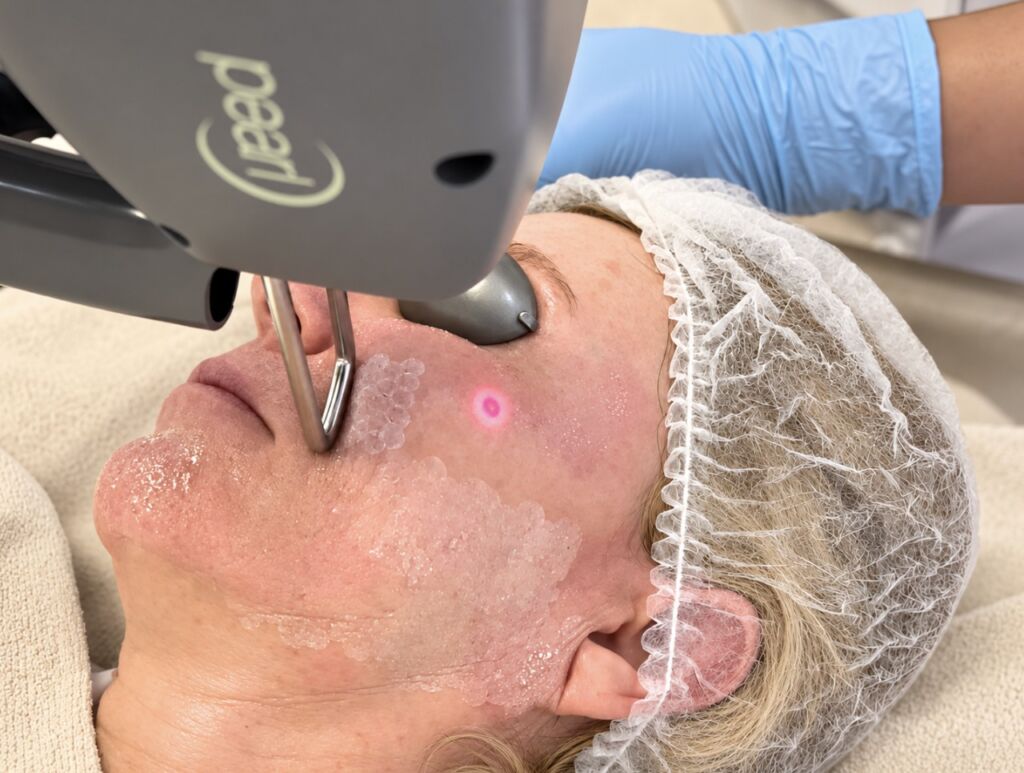
Pearl Fractional creates microscopic columns of treated skin while leaving surrounding tissue intact.
It may be considered for concerns such as:
- Acne scars
- Fine lines
- Sun damage
- Uneven texture
- Uneven tone
- General signs of photoaging
Because Pearl Fractional creates a stronger resurfacing response, expect visible healing.
Redness, swelling, dryness, and peeling can occur during recovery. Peeling may become more noticeable several days after treatment as the skin renews.
This type of treatment may suit someone who wants more focused resurfacing and is comfortable planning around a short recovery period.
Laser Genesis for Gentler Skin Support
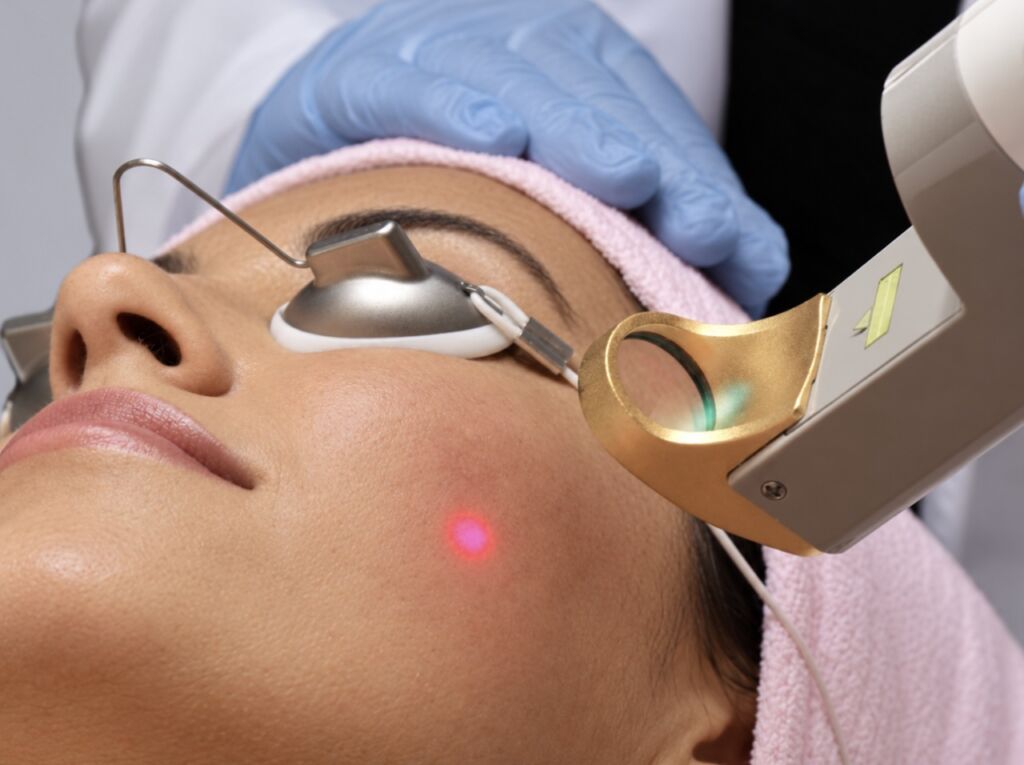
Laser Genesis is a nonablative 1064 nm Nd: YAG laser treatment.
Instead of removing the surface, it uses controlled heat below the skin to support gradual changes in collagen and overall skin quality.
It may be considered for concerns such as:
- Fine lines
- Uneven texture
- Redness
- Enlarged appearing pores
- Mild tone irregularity
- General skin maintenance
Because it does not create the same surface injury as fractional ablative treatment, Laser Genesis usually involves less visible recovery.
Where IPL Fits
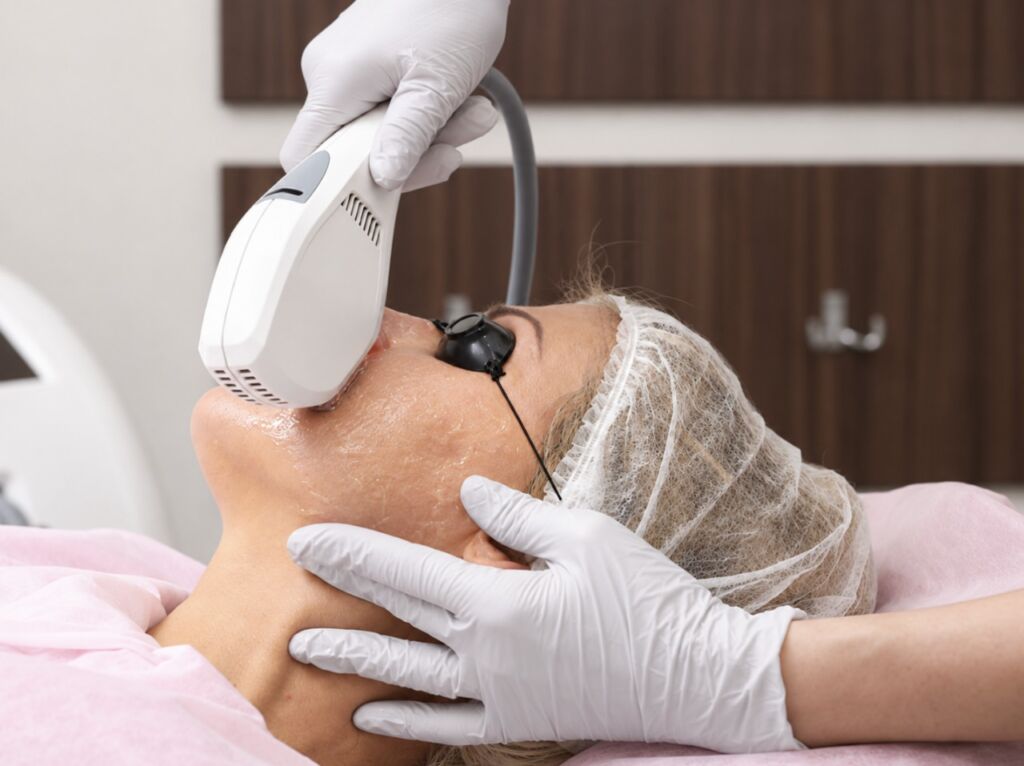
R Skin also offers IPL for pigmentation and redness.
IPL is often grouped with laser treatments in casual conversation, but it is technically different. IPL uses broad-spectrum light rather than a single laser wavelength.
For some patients, pigment or redness may respond better to IPL than to laser skin resurfacing. For others, a laser-based treatment may better fit the concern.
Choosing among these options starts with skin assessment, not with picking a device name from a treatment menu.
Who Is a Good Candidate for Laser Skin Resurfacing?
Laser skin resurfacing may be worth discussing if you are concerned about fine lines, acne scars, rough texture, sun damage, or uneven tone.
Candidacy depends on more than the concern itself.
Why Skin Tone Matters
Natural skin tone plays an important role in laser treatment planning.
Certain laser wavelengths, treatment depths, and settings may carry a greater risk of pigment changes in darker skin tones. That does not mean darker skin cannot be treated. It means the provider must choose the technology and settings carefully.
The goal is to improve the concern while respecting how your skin responds to heat and inflammation.
Medical and Treatment History Matters Too
Before treatment, your provider may ask about:
- Recent tanning or strong sun exposure
- History of cold sores
- Current medications
- Previous laser procedures
- Active skin irritation or infection
- History of abnormal scarring
- Current skin care products
- Other relevant health conditions
These details help guide treatment depth, timing, and aftercare.
A consultation also lets you discuss your schedule, upcoming events, and what recovery feels realistic for you.
Once candidacy is clear, the practical question becomes what treatment and recovery will actually feel like.
What to Expect During Treatment and Recovery
Your experience depends on the laser used, treatment intensity, and the area being treated.
A gentle nonablative treatment will not look or feel like fractional resurfacing.
Before Treatment
Your provider will review your skin concerns, medical history, previous procedures, current skin care products, and recent sun exposure.
This is also when you should clearly discuss your treatment goals.
If you want subtle texture improvement with minimal downtime, your plan may differ from someone seeking more focused resurfacing for acne scars or sun damage.
During the Laser Treatment
The skin is typically cleansed and prepared before treatment. Protective eyewear is used.
Comfort measures depend on the treatment.
With stronger resurfacing procedures, topical or injectable numbing may be used. Heat, warmth, or sensitivity can occur during treatment.
Gentler nonablative treatments often feel different because they heat tissue without creating the same visible surface injury.
Laser Skin Resurfacing Recovery Time
No single recovery timeline fits all laser procedures.
Possible short-term reactions include:
- Redness
- Swelling
- Warmth
- Dryness
- Peeling
- Temporary sensitivity
Pearl Fractional typically involves several days of visible recovery, including redness, swelling, and peeling as the treated skin heals.
Laser Genesis usually involves less visible downtime.
Do not pick or scrub peeling skin after resurfacing. Follow your clinician’s aftercare instructions, and ask before restarting exfoliating acids, retinoids, or other active skin care products.
The visible recovery period is only one part of the process because changes within the skin can continue after the surface has healed.
When Will You See Results?
Some changes may become noticeable once redness, swelling, and peeling settle, but laser resurfacing results do not develop all at once.
Skin texture may begin to look smoother during the early healing phase. Collagen remodeling changes can continue for weeks or months.
Research comparing ablative and nonablative fractional erbium treatments found signs of collagen reorganization and fibroblast activity several months after treatment. The study also noted that some early visible improvement may partly reflect temporary swelling, so judge results over time rather than immediately.
The degree of improvement varies according to:
- Your starting concern
- Treatment type
- Laser settings
- Number of sessions
- Healing response
- Sun exposure
- Long-term skin care
Gentler treatments may require a series. Stronger resurfacing may involve more recovery after each session.
Maintaining results also means protecting your skin from UV exposure and following a skincare plan that fits your needs.
That long-term perspective matters because good laser treatment planning includes both results and safety.
Laser Resurfacing Safety, Side Effects, and Limitations
Laser treatment creates a controlled injury, so temporary reactions are expected.
Common short-term effects may include redness, swelling, warmth, dryness, peeling, and sensitivity.
Less common complications can include:
- Infection
- Persistent pigment changes
- Burns
- Delayed healing
- Scarring
- Cold sore reactivation in people who are prone to them
Risk depends on the laser type, treatment depth, settings, skin tone, medical history, and aftercare.
More aggressive treatment is not automatically the better choice. The right treatment addresses your concern while staying appropriate for your skin and your recovery tolerance.
At R Skin Aesthetics, Raquel Merlini, RN, BSN, focuses on careful assessment, clear education, and natural-looking results. That may mean recommending fractional resurfacing, a gentler laser treatment, or another option entirely.
With those factors in mind, choosing laser skin resurfacing becomes less about chasing a particular device and more about finding the right fit for your skin.
Choosing Laser Skin Resurfacing in Birmingham & Detroit
Laser skin resurfacing includes several technologies, and each one has its place.
Ablative treatments create a stronger surface response. Nonablative lasers work more gradually with less surface disruption. Fractional technology treats small areas of skin while leaving surrounding tissue intact to support healing.
The right choice depends on your skin tone, concern, previous treatments, preferred recovery time, and long-term goals.
At R Skin Aesthetics, Pearl Fractional may make sense when more focused resurfacing is appropriate, while Laser Genesis may suit someone who wants a gentler treatment with less visible downtime.
The goal is not to choose the strongest option. It is to choose the treatment that fits your skin and gives you a realistic plan for improvement.
The questions below address some of the most common concerns patients have before scheduling a consultation.
Frequently Asked Questions
1. How long does laser skin resurfacing take to heal?
Recovery depends on the treatment type and intensity.
A gentle nonablative laser may involve minimal visible recovery, while fractional or ablative resurfacing can require several days or longer.
With Pearl Fractional, you may experience redness, swelling, dryness, and peeling during the first week. Your individual healing time can vary.
2. Is fractional laser the same as a CO2 laser?
No.
Fractional describes how the laser delivers energy to the skin. CO2 describes a specific laser wavelength and technology.
A CO2 laser can use fractional delivery, but you can also perform fractional resurfacing with other laser systems.
3. What is the difference between ablative and nonablative laser resurfacing?
An ablative laser removes controlled portions of the skin’s surface and typically creates more visible healing.
A nonablative laser heats tissue below the surface without removing the outer layer.
Nonablative treatments often involve shorter recovery, but they may require several sessions depending on the concern being treated.
4. Is laser skin resurfacing safe for every skin tone?
Not every laser or treatment setting is appropriate for every skin tone.
Pigmentation, wavelength, treatment depth, and your skin’s response to inflammation all affect safety. Patients with deeper skin tones may require different technologies or more conservative settings to reduce the risk of pigment changes.
A consultation helps determine which options are appropriate for your skin.
5. How do I know if Pearl Fractional or Laser Genesis is right for me?
Pearl Fractional may be a good fit if you want more focused resurfacing for concerns such as acne scars, sun damage, fine lines, or uneven texture, and you can plan for several days of visible recovery.
Laser Genesis may suit someone who wants a gentler nonablative approach for redness, texture, fine lines, or general skin quality with less downtime.
Your skin tone, treatment history, goals, and comfort with recovery should all factor into the decision.
If you are considering laser skin resurfacing in Birmingham or the Detroit area, schedule a personalized consultation at R Skin Aesthetics. We can assess your skin, discuss your concerns, and help you choose the treatment that fits your goals and preferred recovery time.