Smile lines often start subtly. One day, they only appear when you laugh. A few years later, they seem to stay put, even when your face is relaxed.
It is one of the most common concerns we hear from patients throughout Birmingham, Detroit, and Oakland County, Michigan. Many people begin researching Botox for smile lines because they want a fresher appearance without looking different. The challenge is that not all smile lines develop for the same reason, which means not every treatment works the same way.
Botox can help with certain types of facial wrinkles, but smile lines are often influenced by more than just muscle movement. Factors like collagen loss, skin quality, facial volume changes, and the natural aging process all play a role.
Understanding what causes your smile lines is the first step toward choosing the treatment that makes the most sense for your face and goals.
What You’ll Learn From This Article
- What smile lines and nasolabial folds actually are
- How Botox works and where it tends to be most effective
- When Botox may help smile lines and when it may not
- The difference between Botox and dermal filler treatments
- Why volume loss is often part of the conversation
- What to expect during treatment and recovery
- How personalized treatment planning helps create natural-looking results
What Are Smile Lines and Why Do They Develop?
Smile lines are a natural part of facial expression, but several age-related changes can make them more noticeable over time.
Understanding Nasolabial Folds and Laugh Lines
Smile lines, also known as nasolabial folds, are the creases that extend from the sides of the nose to the corners of the mouth. They are often called laugh lines because they become more visible when you smile.
These folds are completely normal. In fact, they are present in nearly everyone. The difference is that younger skin often has enough structural support to keep these lines relatively soft, while aging skin may allow them to deepen.
Some people develop fine lines in this area. Others notice more pronounced folds that remain visible even when the face is at rest.
Common Causes of Smile Lines
Several factors contribute to smile line formation, including:
- Natural aging
- Repeated facial expressions
- Sun exposure
- Genetics
- Collagen loss
- Skin laxity
- Volume loss in the cheeks and midface
Research published in the National Center for Biotechnology Information explains that facial aging involves changes in skin, fat compartments, muscles, and underlying support structures. As facial volume decreases and tissues shift over time, nasolabial folds can become more noticeable.
Because multiple factors contribute to smile lines, determining the cause is often more important than choosing a treatment right away.
That distinction becomes much clearer once you understand how Botox works.
How Botox Works on Facial Wrinkles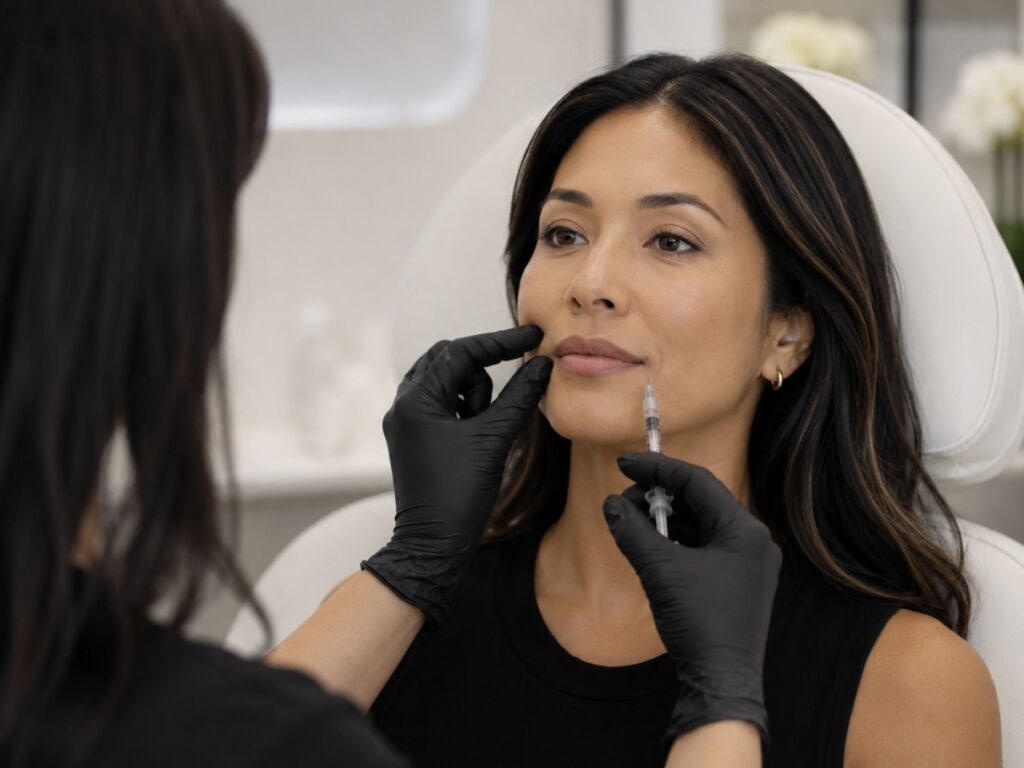
Botox has been used for decades to soften certain facial wrinkles, but it works differently than many people assume.
How Botox Relaxes Facial Muscles
Botox is a purified neuromodulator that temporarily interrupts specific nerve signals sent to targeted muscles.
When those signals are reduced, the treated muscles relax. Less muscle activity means less repetitive skin folding, which can help smooth dynamic wrinkles over time.
This process does not add volume or fill creases. Instead, Botox relaxes the muscles responsible for creating certain expression lines.
Areas Where Botox Typically Works Best
Botox is commonly used to treat:
- Forehead lines
- Crow’s feet
- Frown lines between the eyebrows
- Bunny lines on the nose
- Chin dimpling
- Certain neck bands
These areas are primarily affected by repeated muscle movement.
Smile lines can be different, which is why treatment recommendations often require a closer look.
Does Botox Work for Smile Lines?
The answer depends on what is creating the smile lines in the first place.
When Botox May Improve Smile Lines
Some smile lines are influenced by facial muscles around the mouth and lower face.
In these situations, carefully placed Botox injections may help soften muscle activity that contributes to creasing. The treatment can sometimes reduce the appearance of mild lines and create a smoother look around the mouth.
Patients with early smile lines or subtle dynamic wrinkles may notice improvement with Botox treatments.
When Botox Alone May Not Be Enough
Many deeper smile lines are not primarily caused by muscle movement.
Instead, they are often linked to:
- Facial volume loss
- Collagen decline
- Skin laxity
- Changes in facial fat distribution
- Structural aging
When these factors are present, relaxing muscles may not significantly improve the fold itself.
This is why patients are often surprised to learn that Botox is not always the first recommendation for nasolabial folds.
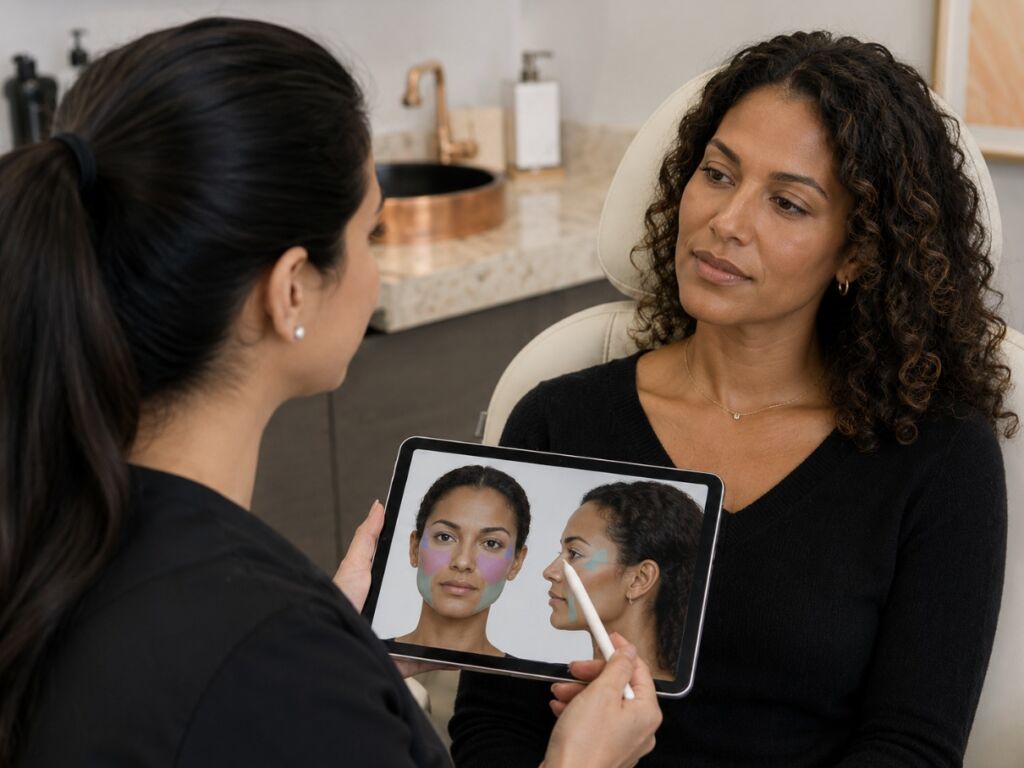
A thorough consultation helps identify what is actually contributing to the concern before deciding on treatment.
That naturally leads to another common question: if Botox is not always the answer, what is?
Botox vs Dermal Fillers for Smile Lines
Botox and fillers are both injectable treatments, but they serve very different purposes.
What Dermal Fillers Do Differently
A dermal filler restores volume beneath the skin.
Most commonly, fillers are used to replace volume that has diminished over time. Strategic placement can help support facial structures and soften deeper folds.
Rather than relaxing muscles, filler physically lifts and supports areas affected by volume loss.
For many patients with moderate or advanced nasolabial folds, filler treatment may provide more noticeable improvement than Botox alone.
Botox and Filler Combination Treatments
Sometimes the most balanced result comes from combining treatments.
Botox and fillers can address different causes of facial aging at the same time.
For example:
- Botox may reduce muscle movement that contributes to wrinkles.
- Dermal filler may restore lost volume.
- Skin treatments may support collagen production and improve texture.
Treating the face as a whole often creates a more natural outcome than focusing on a single wrinkle.
Botox vs Filler Comparison
| Botox | Dermal Filler |
|---|---|
| Relaxes facial muscles | Restores facial volume |
| Best for dynamic wrinkles | Best for folds and hollow areas |
| Reduces muscle movement | Supports facial contours |
| Often used for forehead lines and crow’s feet | Often used for nasolabial folds |
| Temporary results | Temporary results |
| May help some smile line concerns | Often more effective for deeper smile lines |
The right choice depends on the cause of the lines, not simply the location.
What Treatment Is Best for Deep Smile Lines?
There is no universal treatment that works for every patient.
The best option depends on your anatomy, skin quality, and treatment goals.
Factors Providers Evaluate During Consultation
An experienced injector may evaluate:
- Facial structure
- Skin elasticity
- Volume distribution
- Collagen support
- Facial muscle activity
- Degree of folding
- Overall facial balance
This assessment helps determine whether Botox, filler, collagen-stimulating treatments, or a combination approach may be appropriate.
Why Customized Treatment Plans Matter
At R Skin Aesthetics, personalized treatment planning is central to every consultation.
Raquel Merlini brings more than 20,000 hours of injection experience to patient care. As a CANS (Certified Aesthetic Nurse Specialist), Registered Nurse, Licensed Aesthetician, and skincare professional, she has received extensive training in facial anatomy, aesthetic injections, laser treatments, and age-related facial changes.
Rather than recommending a trend or a one-size-fits-all solution, she takes time to understand each patient’s concerns and develop a plan that supports natural-looking results.
Once a treatment plan is established, most patients want to know what the experience will actually be like.
What to Expect During Botox Treatment for Smile Lines

Understanding the treatment process can help you feel more comfortable and informed.
Consultation and Assessment
Treatment begins with a consultation.
During your appointment, your provider may:
- Review your medical history
- Discuss your concerns
- Evaluate facial movement
- Assess smile lines and surrounding structures
- Recommend treatment options
This evaluation helps ensure the treatment plan fits your goals and facial anatomy.
The Treatment Process
Botox injections are performed using very fine needles.
The appointment itself is typically brief, although treatment time varies depending on the areas being addressed.
Your provider carefully evaluates muscle activity and places injections with precision to support balanced, natural-looking movement.
Recovery and Downtime
Botox is known for having minimal downtime.
Most patients return to their normal activities shortly after treatment.
Temporary side effects may include:
- Mild redness
- Swelling
- Tenderness
- Small injection site bumps
- Minor bruising
Your provider will review post-treatment instructions and answer any questions before you leave.
While recovery is generally straightforward, it is still important to understand the treatment’s limitations and safety considerations.
Safety Considerations and Realistic Expectations
A thoughtful approach to treatment starts with understanding both the benefits and the limitations.
Is Botox Safe for Smile Lines?
Botox has been extensively studied in both medical and cosmetic settings.
Research published through the National Center for Biotechnology Information supports the safety and effectiveness of botulinum toxin for appropriate aesthetic applications when administered by qualified professionals.
Provider training and anatomical knowledge remain important factors in treatment safety and outcomes.
Understanding Potential Side Effects
Potential side effects may include:
- Temporary swelling
- Bruising
- Tenderness
- Mild discomfort
- Temporary asymmetry
More significant complications are uncommon but can occur with any injectable treatment.
Choosing an experienced provider and following aftercare instructions can help reduce risk.
Setting Realistic Expectations
Botox can soften wrinkles and reduce the appearance of certain lines. It cannot stop the aging process or completely erase every crease.
Results vary based on:
- Facial anatomy
- Muscle activity
- Severity of wrinkles
- Skin quality
- Treatment approach
Patients seeking subtle, natural improvement often achieve the most satisfying outcomes because expectations align with what the treatment is designed to do.
The provider guiding your treatment can make a meaningful difference in that experience.
Why Birmingham and Detroit Patients Choose R Skin Aesthetics
Patients throughout Birmingham, Detroit, Bloomfield Hills, Royal Oak, Troy, and surrounding Oakland County communities often want more than a quick cosmetic treatment.
They want honest guidance, clinical expertise, and a provider who takes time to listen.
At R Skin Aesthetics, consultations focus on education, personalized recommendations, and long-term skin support. Every treatment plan is built around the individual rather than a trend.
Raquel’s background in aesthetic medicine, skin health, laser treatments, and injectables enables her to assess the full picture before making recommendations.
For some patients, Botox may be the right choice. For others, dermal fillers, collagen-stimulating treatments, laser procedures, or a combination approach may make more sense.
The focus is always on helping patients make informed decisions and achieve natural-looking results that complement their features.
Is Botox the Right Solution for Your Smile Lines?
Botox for smile lines can be effective in certain situations, particularly when muscle movement contributes to the appearance of wrinkles around the mouth.
However, many smile lines develop because of volume loss, collagen changes, and facial aging that Botox alone cannot address.
The most reliable way to determine the right treatment is through a personalized consultation with an experienced injector who understands facial anatomy and the factors contributing to your concerns.
A customized treatment plan often provides a clearer path forward than choosing a treatment based on a single wrinkle or fold.
Frequently Asked Questions About Botox for Smile Lines in Birmingham & Detroit
1. Can Botox for smile lines completely remove nasolabial folds?
Usually not. Botox may soften certain smile-line concerns, but deeper nasolabial folds often involve volume loss and may respond better to filler or a combination treatment.
2. Is Botox or dermal filler better for smile lines?
It depends on the cause of the smile lines. Botox addresses muscle movement, while dermal fillers restore volume. Many patients benefit from one treatment, while others may benefit from both.
3. How long does Botox for smile lines last?
Results vary from person to person, but Botox typically lasts about three to four months before muscle activity gradually returns.
4. Can Botox and fillers be used together?
Yes. Botox and fillers are frequently combined to address multiple aspects of facial aging and create a balanced, natural appearance.
5. How do I know if my smile lines are caused by muscle movement or volume loss?
A consultation with an experienced injector is the best way to determine the cause. Your provider can evaluate facial muscles, skin quality, and volume distribution before recommending treatment.
Schedule a Personalized Consultation at R Skin Aesthetics
If you are considering Botox for smile lines and want clear, honest guidance, schedule a consultation with R Skin Aesthetics in Birmingham.
We take the time to understand your concerns, evaluate your facial anatomy, and recommend treatments that align with your goals. Whether Botox, dermal filler, or another approach makes the most sense, your treatment plan will be designed around natural-looking results and personalized care.